Japan 432
Readings in Modern Japanese Literature
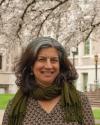
Instructor: Associate Professor Davinder L. Bhowmik (she, her)
Office: M239 Gowen Hall
Email: dbhowmik@uw.edu
Office Hours: Thursdays 11-1 & by appt.
Readings: Available in Canvas under Files
Prerequisites: 2.5 minimum grade in Japan 303 or its equivalent
Class meetings: TTh 3:30-5:20, ECE 025
Course Description:
This course focuses solely on developing advanced Japanese reading skills through practice. You will read modern Japanese fiction on your own and then meet to go over that reading, focusing on grammar and vocabulary. We will also discuss literary devices and effects whenever possible. Unlike most other language offerings, this course is made up of readings that have not been tailored or selected for ease of comprehension. Expect to read celebrated fiction of recent years, regardless of difficulty, in its complete form. The goal of the course is to open your eyes to the real complexity and beauty of literary Japanese, while providing you with the tools necessary to read even the most challenging fiction. My hope is that the course will prepare you to embark on a lifelong path of reading Japanese literature – whether professionally or recreationally.
A grade of 2.5 or higher in JAPAN 303 or its equivalent is the course prerequisite. A high level of Japanese reading ability is required; expect the gulf between third-year Japanese readings and these stories to be substantial. Readings in Tobira are not authentic, J-lit is!
Course Evaluation:
Preparation and Participation 50%
Weekly Quizzes 30%
Final Exam 20%
Preparation and Participation:
You will be expected to complete a reasonable amount of the assigned readings before class meets. Class meetings will involve recitation in Japanese and translation into English. You will be called on at every class meeting, multiple times. Inadequate preparation results in a reduction of your participation grade. Non participation results in a zero. If you miss class come to office hour to go over what you’ve missed and/or check with a classmate. Late arrivals disrupt class; therefore, do arrive on time. Coffee/tea/water is fine to bring to class but food is not allowed. Please turn off all beepers and cell phones before class begins.
Quizzes:
Weekly Japanese-English translation quizzes made up of four sentences chosen from the previous week's reading and will be given at the start of class on Thursdays starting Week 2. I do not allow makeup quizzes but I always drop your lowest score.
Final Exam:
The format of this exam is similar to the weekly quizzes, but will consist of sentences drawn from the last few weeks of class. The final exam will take place in class on the regularly scheduled exam date during finals week.
Recommended References:
You will need a good dictionary. Several non-circulating copies of the dictionaries below are available for use in the reading room of the Tateuchi East Asia Library, 3F Gowen Hall. Familiarize yourself with these texts or their electronic equivalents. There are some excellent online options, including Weblio, goo, Jisho.org, and Yahoo! Japan’s dictionary. If you don’t have reliable internet access, consider investing in an electronic dictionary. If you have an iPhone or and iPod Touch, various dictionary apps are available (Imiwa, Yomiwa, Takobotto). Daijirin is an excellent such app. Finally, Google, Google Images and Wikipedia can be very useful as well. Avoid AI tools (ChatGPT for example). If you do use these tools, use them ethically by letting me and others know.
An excellent on-line source available to UW students is: Japan Knowledge. From the UW Library page go to Articles and Research Databases and look under “J.” Only one user at a time so please log out when you are done!
*Japanese-Japanese dictionary: Shinmura Izuru, ed., Kōjien. Fifth edition. Tokyo: Iwanami shoten, 1998.
*Japanese character dictionary: John M. Haig, et al, ed. The New Nelson Japanese-English Character Dictionary. Tokyo: Tuttle, 1997.
*Japanese-English dictionary: Koh Masuda, ed. Kenkyūsha's New Japanese-English Dictionary. Fifth Edition. Tokyo: Kenkyūsha, 2003.
Access and Accommodations
Your experience in this class is important to me. It is the policy and practice of the University of Washington to create inclusive and accessible learning environments consistent with federal and state law. If you have already established accommodations with Disability Resources for Students (DRS), please activate your accommodations via myDRS so we can discuss how they will be implemented in this course.
Religious Accommodations: Washington state law requires that UW develop a policy for accommodation of student absences or significant hardship due to reasons of faith or conscience, or for organized religious activities. The UW’s policy, including more information about how to request an accommodation, is available at Religious Accommodations Policy (https://registrar.washington.edu/staffandfaculty/religious-accommodations-policy/) (Links to an external site.). Accommodations must be requested within the first two weeks of this course using the Religious Accommodations Request form (https://registrar.washington.edu/students/religious-accommodations-request/) (Links to an external site.).